
Tag: journalism

  • A Playlist for Women’s History Month 

    A Playlist for Women’s History Month 

    What do you gravitate to? 

    What inspires you? 

    For me, it is listening to women. I’ve always gravitated towards a ‘female’ sound, melodically, but also due to its familiarity all my life.

    Music is a universal expression – listening to women, I feel connected and heard in particular. Through the sharing of their emotional experiences, melodic voice and resonation, I am drawn to music and how it shapes and reflects female expression and beauty. Listening to women, I find a lot of solace, and appreciate the power of music to build bridges between worlds.

    Spanning throwbacks from the 2000s, the rise of independent music and soulful classics, L.O.V.E is for the girls – check out my TIDAL playlist here.

    LOVE – jhene aiko 

    The thirteenth track from her third studio album Chilombo (2020), Jhene sings about having faith in love, reflective of her spiritual beliefs and practices. According to Genius, all the songs from this album features ‘crystal alchemy singing bowls as a form of sound healing’. A feel-good track, Jhene reminds us we are all deserving of love and good energy.

    Free – SAULT 

    SAULT is the enigmatic British collective defining contemporary sounds with unique style, with Cleo Sol as the lead vocalist. Being free often means embracing aloneness. Energetic, lyrically political with up-beat rhythms, Free rejects the idea of ‘giving up’ for no one and having faith in a higher power to feel fulfilment. 

    Made It – Gayathri Krishnan

    Trained in Carnatic music, Gayathri Krishnan is a rising LA-based independent artist blending traditional sounds with contemporary R&B influences. Made it is about hyping yourself up, staying true to your vision and persevering as the artist path is a non-linear one.

    Sorry – Beyonce

    From her visual album Lemonade released in 2016, I come back to this song religiously when I need a mood lift. Sorry is an empowering ‘clap back’ break up anthem. #sorrynotsorryJay-Z

    Liquid in My Feet – Chandra 

    An independent artist hailing from NYC, Chandra maps a sonic dreamscape for the listener, opening a portal for deep connection and embrace through her melodic vocals. Conscious and soulful, this is for the lover girls.

    God is a Woman – Ariana grande 

    Known as one of Ari’s grandma’s favourite tracks, I come back to this song for a few reasons – the truth the title holds, Ari’s unmatched vocals and the production side of things, especially the way it adds space and airiness to the mix and her sultry vocals.

    Pretty Girl Rock – Keri Hilton 

    From her album No Boys Allowed (2010) and produced by Neyo and Chuck Harmony, Pretty Girl Rock is a fun, nostalgic throwback anthem, with the singer sharing how the notion of beauty is inherent to a woman’s uniqueness.

    Survivor – Destiny’s child

    Energetic, powerful and a classic r&b throwback, listening to Survivor feels like experiencing a mini catharsis. This is for the girls that need a reminder of their power.

    Baby Girl – Chloe x Halle 

    I remember watching the covers of the musical duo and sisters around the Tumblr-esque era. Produced by Chloe, I love this song. The hook especially is catchy and melodic with an empowering message.

    Flamenco – Beyonce

    Flamenco is one of my favourite tracks from Cowboy Carter. It feels eerily existential, as Beyonce contemplates about her life and potentially the legacy she will leave after death, the decisions to make and even asks for divine intervention. Her layered vocals, harmonies and the acoustic-driven arrangement are gorgeous, emotionally opening us to the song.

    Didn’t Cha Know – Erykah Badu 

    Erykah Badu and her music are divine experiences of their own. The second track from her album Mama’s Gun (2000), Didn’t Cha Know has a hypnotic rhythm and delves into the idea of flowing with the natural rhythms of life.

    Mama – Raveena

    Raveena has a special place in my heart. Dedicated to her mother and fellow immigrant mothers, she released ‘Mama’ on Mother’s Day. As she sings and ponders about what life was like for her mother before she became a parent, I find myself reflecting and wrestling on this question of motherhood often intrinsically linked with sacrifice and unconditional love.

    I wish I knew how it would feel to be free – Nina Simone

    Released in the late 60s, Nina sings about hope and freedom for black communities in America. Despite segregation being legally abolished in the mid-60s, racism was a systemic problem and still remains so today. Nina’s vocals are so pure and soothing, and when I first heard this song I felt touched by her soulful, enduring tone. 
  • Far from home: Nepal’s remittance-driven economy

    Far from home: Nepal’s remittance-driven economy

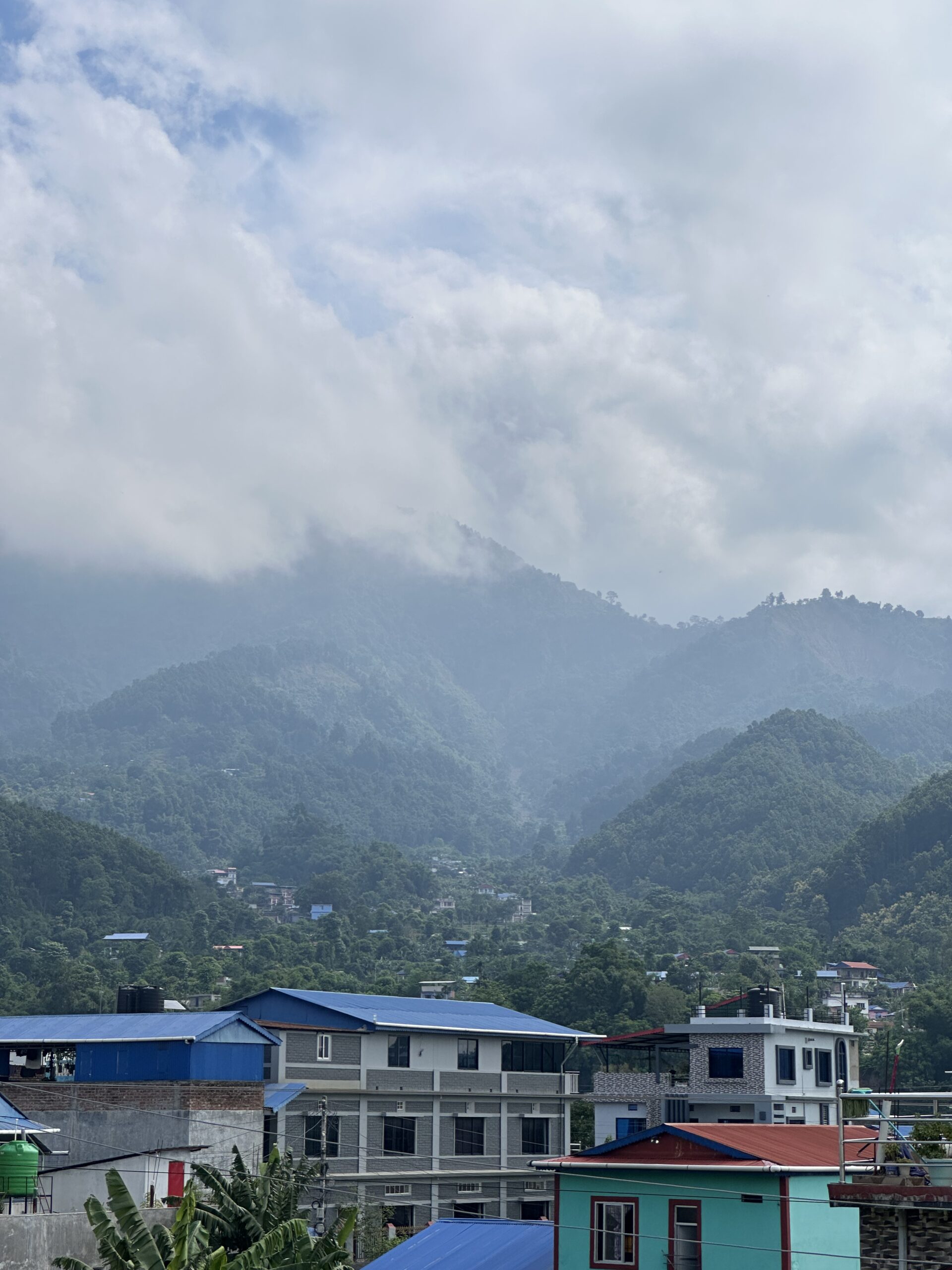
    I call Doha the bridge to home. As a bideshi living in the UK, it is the place in-between, before flying over to Kathmandu.

    Doha made me reflect on my people – while it is just a transitory stop for me, it is a dark place for hundreds of Nepali migrant workers who have left home in search of foreign employment. According to Humanity United, Nepali migrant workers make up an estimated 12.5% of Qatar’s entire population. 

    Despite Doha’s ‘glitz and glam’, like Nepal, Doha reminds me of the deep-seated inequalities between the elite and everyday working citizens.

    1600 Nepalis workers leave the country every day, according to the International Labour Organisation (ILO). 740,000 labour permits alone were issued in the fiscal year of 2023/24. Labour migration shapes Nepal’s socio-economic landscape, with the economy heavily dependent on agriculture and remittances – remittances accounting for over one-fifth of Nepal’s national income. Having faced a number of political changes over the years, youth unemployment is especially high estimating 20% in 2024.

    Witnessing the political turmoil and unrest that toppled the Oli government a few months ago, I understood the deep wounds of my nation. Plagued by a lack of opportunities within the country, deep social inequalities and overall disillusionment fuelled by government negligence, nepotism and corruption, youth-led Gen-Z protests voiced these concerns and demandsfor systemic change and transparency. What made the movement powerful and effective was its decentralised organising facilitated by social media, ‘waking up’ decades of public anger and creating waves of resistance after the trigger of a government social media ban. 

    When hundreds of citizens have no option but to emigrate or migrate in search for work everyday, the country’s economic, political and social developments are challenged. The cultural fabric of society erodes, slowly made destitute, because people make a nation, not governments or elites.

    The ILO states Nepali migrant workers are the ‘lifeline’ of the country’s economy. But Nepal’s remittance-driven economy is a symptom of a larger problem: it points to the underlying issues within society’s fabric such as the lack of income-generating opportunities, liveable wages, poverty (a quarter of Nepal’s population live below the poverty line) and high unemployment particularly among youths, triggering anti-corruption protests by Gen-Z in September 2025. While the dependency on remittance from families abroad is evident on ‘household and national levels’, supporting family income in Nepali households, reducing poverty and upholding Nepal’s economy, Bhim Prasad Subedi, Professor of Geography states, ‘while remittances provide essential income for families, they often fail to contribute to long-term, sustainable development.’

    Nepal has a long history of labor migration linked to British colonial interest, for example, the recruitment of the Gurkhas in the British Army since the 1800s until today. There is also a higher prevalence of men undertaking foreign employment according to national figures. It is estimated that 3.5 million Nepali people (14% of total population) are working abroad, primarily in Malaysia, the Gulf Cooperation Council (GCC) made up of six countries: Bahrain, Kuwait, Oman, Qatar, Saudi Arabia, and the United Arab Emirates, and India, according to MIDEQ. The top country of destination for Nepali migrant workers is Malaysia. 

    What is clear in such cases of labour migration, from the Gurkhas to Nepali migrant workers has been the demand for cheap labour, facilitated by both domestic and employing countries. 

    What is the true cost of Nepali migrant labour?

    Since Qatar was awarded the 2022 FIFA Men’s World Cup in 2010, it paved way for the ‘Nepal-Qatar migration corridor’.

    Aspiring to go abroad for work and a chance to make a new life, Humanity United reports how Nepali migrant workers in Qatar are met with the ‘typical’ experiences many labour migrants face far from home: ’excessive and illegal recruitment fees for access to jobs’, pressure to take out ‘high-interest loans’ and other financial sacrifices. Once in the destination country, they are further subjected to seized passports and ‘contract substitution’ where the initial terms and conditions of the job description is altered from the original offer. ‘Wage theft’ is unfortunately also rampant, leading to debt bondage and a precarious cycle of abusive working and living conditions with uncertain pay or to return home in financial debt. According to the Labour Migration Report, Nepali migrant workers are mainly carrying out ‘low-wage labour’ in construction, manufacturing, domestic work and security – every step of going bidesh results in a sacrifice. 

    It is no doubt that human rights organisations and international news outlets have reported on the exploitation Nepali migrant workers have faced in the Gulf region over the years, with Amnesty International releasing a prominent report in 2017.

    Dinesh* who currently works in Malaysia as a security guard, is on a typical work contract of 3 years. He told me he was able to secure the job by directly applying to the company through a friend recommendation. While he paid NPR 100,000 to the company, others paid double the amount due to having to go through agents which was a longer process and brought extra frees. He says the Malaysian government prioritises Nepali workers like him for security roles due to their trustworthy reputation. He works 12 hours shifts, 30 days with no days off. Being on standby 24 hours, he is only given a 10-15 minutes lunch break as he has to also consider the other Nepali security guards on duty. He believes both governments, managers, staff and locals could support Nepali migrant workers by following and enacting laws and procedures in and out of the work place. 

    Amnesty International reports how there is a disparity between the investment labour migrants make to Nepal’s economy, and the government’s investment in the ‘safety, rights, dignity, and long-term welfare of labour migrants’: in fact, less than 1% of the state’s national budget is allocated annually to government departments mandated to protect labour migrants. Nepali migrant labour exploitation still remains prominent where they continue to face discrimination through recruitment and wage deception, harsh working and living conditions and wage inequality such as being systematically paid less than other foreign workers, with lack of enforcement of minimum wage policies by the Nepali government challenging host countries as such.

    The problem with Nepal’s remittance-driven economy is that it lacks self-sufficiency, driven by government negligence. While money flows in, people’s labour is systemically driven out, no longer contributing to society productively in a large scale which significantly impacts the health of the economy. 

    The primary concern is enforcement of ethical labour policies and procedures by the Nepali government, and domestic recruiting agencies and agents to ensure recruitment transparency, fair working conditions, and stronger protections for Nepali migrant workers abroad that sets the benchmark for overseas employers to then follow through. The upcoming government must enforce routine labour inspections and minimum wage policies, and factor in increasing investment in the migration budget sector to meet ongoing labour concerns. 

    *anonymised name

  • Music in the west is pioneered by black culture

    Music in the west is pioneered by black culture

    I will admit I live and breathe music. Music shapes so much of my emotional experiences; I cry listening to Orion Sun’s dreamy vocals full of lyrical longing; I feel SiR’s desperate plea as he sings of the idea of a love that can’t be in John Redcorn; I feel euphoric listening to rock songs by homegrown Nepali bands. 

    As a Nepali diaspora living in the UK, my musical experiences has been and still is heavily shaped by artists in the west. Growing up, I wanted to play the guitar after discovering Taylor Swift during her iconic Country era. During the confusing, chaotic beginnings of teenhood of hyper-centering white boys, I converted into an instant ‘belieber’ and ‘directioner’. Naturally, it fell through with time, age and place, and as I diversified my music taste. During my 20s, my listening experiences with Nepali music expanded and I fell in love with Bartika Eam Rai and Yugal Gurung. I learnt how timeless Beyonce truly is as an artist, vocalist and performer, holding and sustaining an eclectic repertoire over many decades (we all know her team works hard, but Bey works harder). 

    As my personal listening experiences changed, grew and diversified, I found a deep love for R&B and later, Neo-soul. From Kehlani’s You Should Be Here drop a decade ago, to discovering singer-songwriter and vocalist, Cleo Sol and her powerful, soulful sound, I hold a deep gratitude for people who make music. Music was my first love, and I admire the power it has to continuously shape my world and my emotional experiences.

    It is undeniable that music culture in the west is pioneered by black culture. Black culture, or African-American culture to be specific, has a global impact on shaping popular culture, spanning art, fashion and music. Black culture’s influence on modern music in the west is foundational, as major western music genres including Jazz, Blues, Soul, rock ’n’ roll, Pop and Hip-Hop were rooted within African-American communities and African origins before their hyper-commercialisation. 

    Vince Dixon, a digital media journalist who curates data-driven projects about black history and black culture in link to American society affirms how ‘nearly all American-made music genres come from Black Gospel and the Blues’. His research uses visual data referred as the ‘Family tree of American music’ to highlight his findings. It is interesting to me how many of these genres became co-opted in the mainstream, such as how rock bands are known as being primarily white in western popular music. Dixon makes the argument of how black culture and art is globally valued, monetised and commercialised, but black people have systemically not been seen in this same light of value, making links with America’s racist historical past.

    If we look at the blues, blues originated among African American communities within the Deep South during the 1860s. Although influenced by African American history, the blues is not ‘slave music’. Lamont Pearley Sr., a African American Tradition Music Folklorist, posits ‘although it was cultivated by the descendants of slaves, the blues was the expression of freed African Americans’. The evolution of blues music was influenced by The Great Migration – for example, Muddy Waters, known as the father of Chicago Blues, was part of this migration, and the genre became central during the Harlem Renaissance in the 1920s and 1930s.

    If we look at jazz, the birthplace of jazz began in the vibrant streets of New Orleans around the late 19th and early 20th century. Post civil-war America, a melting pot of life experiences and musical influences of African, Caribbean and American descent contributed to the creation of jazz. Louis Armstrong is popularly known as the ‘Father of Jazz’.

    When we consider the rock ’n’ roll genre, it is associated with the more rebellious spirit, the unconventional and the energetic movement of the mid-1950s. Pioneers of rock ’n’ roll are regarded to be Little Richard and Chuck Berry. However, Elvis Presley popularised the music and earned the title ‘King of Rock and Roll’. Sister Rosetta Tharpe is widely recognized as the ‘Godmother of Rock and Roll’ for her pioneering fusion of gospel music with innovative electric guitar playing, which directly influenced early rock and roll artists like Elvis Presley and Little Richard. The Beatles were also very much influenced by these early rock ’n’ roll pioneers.

    With rock ’n’ roll roots, pop music came into being for mass appeal, or what was the popular music of the time. Child prodigy Michael Jackson, known as the ‘King of Pop’ remains one of the most culturally significant figures of the 20th century. His 1982 album Thriller skyrocketed him into global superstardom and is the best selling album in global history, with estimated sales of 70 million worldwide. Known for his star power, his songs, music videos, dancing and fashion influenced the realms of popular music by being genre-defying and transcending American racial barriers.

    Popular western music today comes from a foundation rooted in black culture. And as artists and listeners, we must uplift, give credit to and value the culture that has created, shaped and influenced the western music landscape. Invisible power structures remain in our personal and professional lives, as well as in the music industry. As I learn to navigate this new terrain, I take into account how the personal is political. As someone who listens to major western genres like R&B and sub-genres like Neosoul, I am continually inspired by, and learning from black artistry, talent and influence in my music journey.